
Épisode · Wiki Storia
S1 - E5 | The Village Market and the Ration Tickets
Why did you need tickets to buy food during the war?
On the road to knowledge with music for 3 to 6 year olds!
Today, we are going to learn about ration tickets during the war.
Pictures of our little adventurers in action - can you come and play with them?
🎼 Ready to move, sing and dream?
This first melody will take you on a musical discovery of the world!
🎤 Move, sing, discover!
Let's get adventurous with this second soundtrack. 😀
🎙 Read the lyrics to our music:
The lyrics of the two songs are identical, only the melodies are different.
The adventure begins with a story and discoveries for 6 - 8 year olds!
📻 Listen to this article as a podcast
For an immersive experience, enjoy our article in podcast mode. Click the player below to start listening and let the article carry you away!
📝 Quick summary of key information
Why did you need tickets to buy food during the war?
During the war, it was hard to find food and other important things. To solve this problem, people used ration tickets. These tickets let you buy bread, sugar, or soap. Markets were also places where people could help each other to survive.
Ration tickets were small, precious pieces of paper. They helped to share rare products fairly. With one ticket, you could buy a certain amount of food or other necessary items.
Food was missing during the war because factories and farms were often damaged by the fighting. Transport was also disrupted, making it hard to move goods around.
Markets were very important places for the people. They could trade things they had too much of for things they needed. It was also a place where people could meet and help each other.
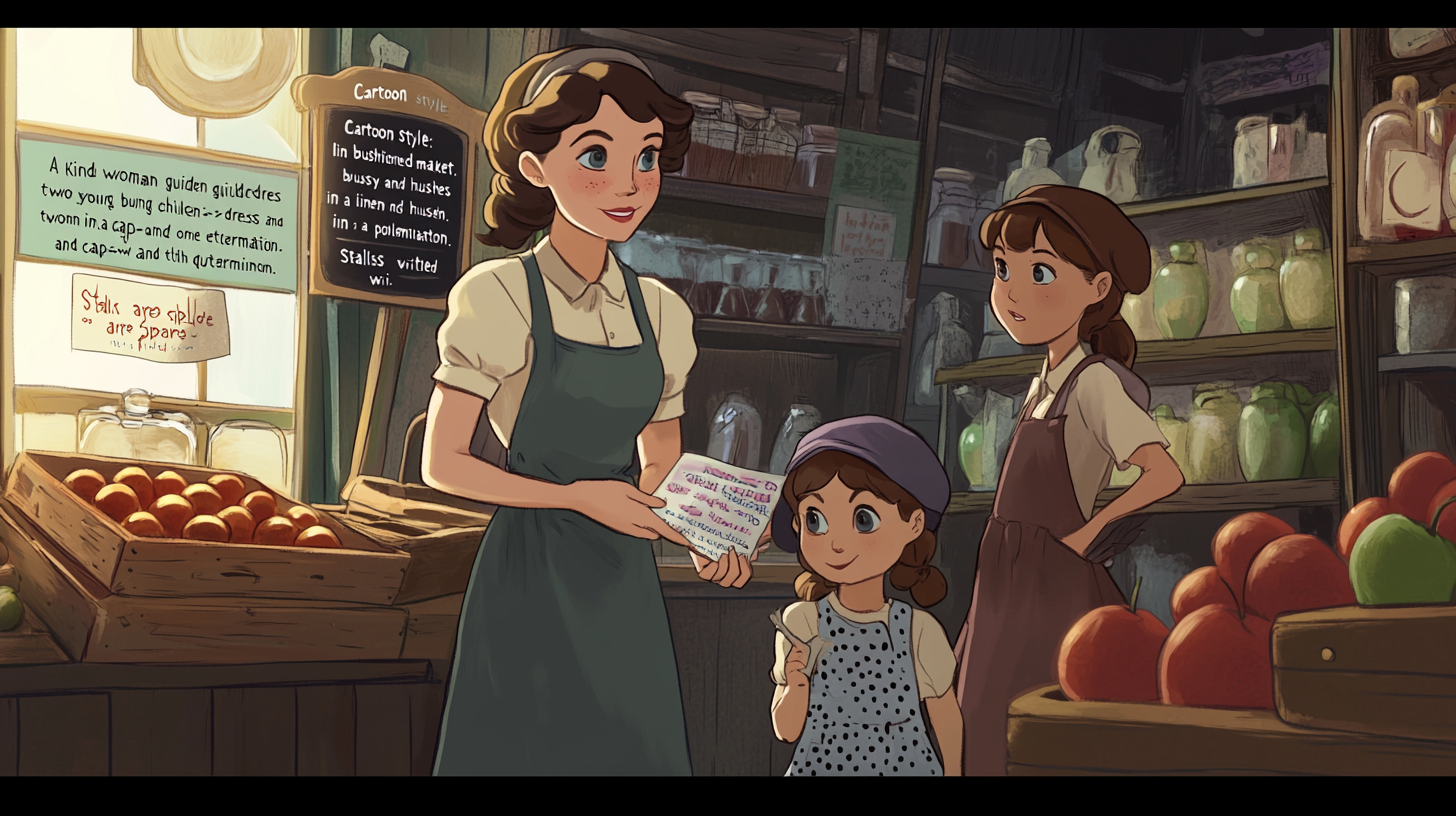
The Village Market and Ration Tickets
Why did you need tickets to buy food during the war?
The Discovery of the Market
After listening to the day's news brought by Joseph the Postman, Sarah and Paul get ready for a special day. Joseph arrives every morning on his red bike. He delivers letters, newspapers... and sometimes a wink to Mrs. Jeanne. This is how the children learn what is happening outside. Sarah and Paul listen carefully to the news about the war, information about rationing tickets, and stories of the bravery of the resistance (1). Every day, their dog, a sweet black Labrador named Lulu, joins them, adding a touch of comfort during this troubled time. That morning, Mrs. Jeanne tells them they are going to the market (2). The children are excited, but also a little anxious, because they know the war has changed many things.
Mrs Jeanne, with a reassuring smile, says:
« You will see, it is a bit different from before. »
Sarah, curious about what she sees, asks:
« Why are people talking quietly? »
Mrs Jeanne says to the children:
« They share news. Sometimes, they exchange important things. »
After walking for a while, they arrive at the market. The stalls are almost empty. People are whispering as they exchange tickets. Sarah, a little girl with curly black hair, wearing a polka-dot dress and a small wooden suitcase, looks around. She sees rare vegetables, gray bread, and tired people.
Paul, curious, asks then:
« Why is there so little food? »
Mrs Jeanne, with a soft and protective voice, explains then:
« The war changed everything. You need tickets to buy things. Everyone has a little, but not much. »
Not long after, Sarah, a little girl with curly black hair wearing a polka-dot dress and a small wooden suitcase, sees an old lady. She gives her tickets in exchange for a few apples. That day, she understands that even a fruit can become a treasure. Paul, Sarah's little brother, who is 6 years old, watches the children around him. He is more shy, but he listens to everything and remembers every word. He loves to draw what he understands. He has blond hair and dark eyes, with a too-big cap and rubber boots. They look a bit thin. The adults speak in low voices. He realizes that everyone is trying to survive. Mrs. Jeanne, the kind and protective farmer, with a linen apron and hands always full of flour or straw, explains to the children that the ration (3) tickets are there so that everyone can have a little food, even if it's not much. She shows them how to exchange their tickets for vegetables, bread, or even a bit of meat.
Helping Each Other at the Market
Mrs. Jeanne takes the children to the market. Sarah notices that the stalls are empty, and people are whispering to each other. Sarah gives her tickets to an old lady in exchange for a few apples. That day, she learns that even a fruit can become a treasure. Paul watches the children around him. They look thinner. The adults are speaking in low voices. He realizes that everyone is trying their best to survive. Mrs. Jeanne explains to the children that the ration tickets are there so that everyone can have a little food, even if it’s not much. She shows them how to exchange their tickets for vegetables, bread, or even a bit of meat. She tells them stories about neighbors who share their harvests, or farmers who give extra eggs to those who need them. She also talks about the resistors, who risk their lives to bring food to hidden families like theirs.
Sarah, curious about Mrs Jeanne's stories, asks:
« Are the resistors heroes? »
Mrs Jeanne, with a reassuring smile, explains:
« Yes, they help a lot. They bring food and news. »
Paul, curious, asks:
« How do they do it? »
Mrs Jeanne explains to the children:
« They hide and move at night. They use marks on the trees to find their way. »
Sarah, after listening carefully, asks:
« Can we help them? »
Mrs Jeanne, with a soothing voice, explains: « Yes, by being careful (4) and brave. Every little thing matters. »
After understanding the value of small treasures at the market, the children soon find themselves on an unknown path. Mrs. Jeanne explains to them that, as she had mentioned, they hide and move at night. As they walk with her, Sarah and Paul discover a trail lined with discreet marks carved into the trees. Mrs. Jeanne tells them that these marks were used by the resistance to find their way and hide in the woods. That day, they learn that these heroes fought for freedom, and that each carving (5) told a story of courage and resistance. The children then wonder what adventures await them on this mysterious (6) trail, and what new lesson they will learn. With Lulu by their side, they are ready to discover the secrets of the forest and continue their learning about life during the war. Maybe next time, they will find clues (7) about the resistance or even hidden treasures in nature.
📺 Watch this article in video format
For an even more immersive experience, watch our video: