
Épisode · Wiki Storia
S1 - E7 | The Attic Memories
Why is it important to keep memories of the war?
On the road to knowledge with music for 3 to 6 year olds!
Why is it important to keep memories of the war?
Pictures of our little adventurers in action - can you come and play with them?
🎼 Ready to move, sing and dream?
This first melody will take you on a musical discovery of the world!
🎤 Move, sing, discover!
Let's get adventurous with this second soundtrack. 😀
🎙 Read the lyrics to our music:
The lyrics of the two songs are identical, only the melodies are different.
The adventure begins with a story and discoveries for 6 - 8 year olds!
📻 Listen to this article as a podcast
For an immersive experience, enjoy our article in podcast mode. Click the player below to start listening and let the article carry you away!
📝 Quick summary of key information
Things, letters, and war stories are precious treasures. They show what our ancestors went through during the conflicts. These memories can be uniforms, maps, diaries, or photographs. They tell stories of bravery, sacrifice, and everyday life during the wars.
Remembering the war is very important. It helps us not to repeat the mistakes of the past. Young people can learn from these memories and understand the importance of peace. By keeping these memories, we honor those who suffered and fought.
Remembering the past helps us build a better future. By learning from mistakes, we can avoid fights and promote peace. Children can grow up in a safer and fairer world, where wars happen less often.
In the end, keeping memories of the war is very important. They remind us how important peace and understanding are. By learning from our history, we can build a better future for everyone.
Attic Memories
Why is it important to keep war memories?
The Attic Discovery
After seeing a train full of young soldiers heading to the front, their faces marked by worry (1), Louis and Papy Henri felt heavy-hearted. Among them, a shepherd dog, a loyal friend to a soldier, added a touch of comfort to this touching (2) scene. Louis wondered what these young men would experience and why train stations had become places of such poignant memories (3). Louis, a lively (4) and sensitive boy with black hair, in a beret, with a scarf knitted by his mom, had always been curious. Papy Henri, an old man with a white mustache, always with his mailbag, knew how to ease his grandson's worries.
Louis, looking at the train, asks:
« Grandpa, where are these soldiers going? »
Papy Henri, with a calm and reassuring voice, explains to Louis:
« Soldiers go to war, Louis. They have to protect our country. »
Louis, eyes full of questions, asks:
« But why? »
Papy Henri, with his soft and comforting voice, then explains to Louis:
« Sometimes, countries argue. The soldiers must protect them. »
Louis, after watching the soldiers leave, said:
« I want to understand, too. »
Papy Henri, with a mysterious smile, suggests:
« Let's go to the attic. You will see things from the war. They tell stories. »
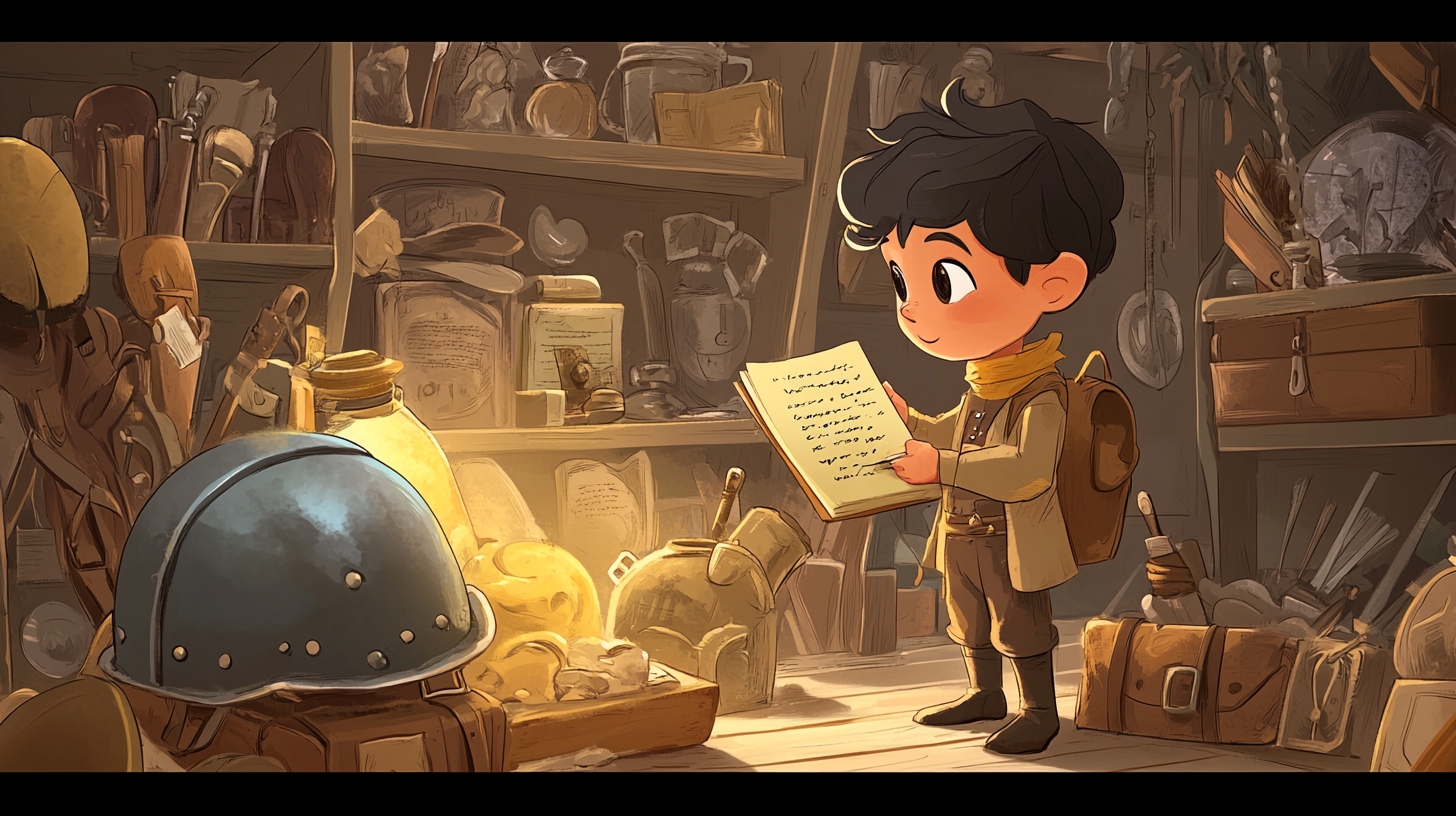
Not long after, Louis and Papy Henri went up to the attic. Louis loved this place full of memories. The objects, letters, and war stories helped young people understand what their ancestors (5) had gone through. Louis found an old helmet, a yellowed journal, and a letter from an unknown soldier, found in a forgotten box. He felt a special emotion when touching these things. He wrote to Karl, his German cousin, to share his discovery.
He wrote to Karl: 'One day, it will be our turn to tell all this to others. So they know... and they hope.
The Words of Hope
After sending the letter, Louis started to think. He thought about what Papy Henri had told him. He understood that remembering was important.
Louis, holding the old yellowed newspaper, asks:
« Why is it important to remember? »
Louis went to the village library. He looked for books about the war. He wanted to know more.
Louis, after reading a few pages, explains: « The soldiers live in trenches (6). »
Louis, after reading the books, says out loud:
« It is hard. They are cold and hungry. »
Louis imagined the soldiers in the trenches. He thought about Karl. He wondered how his cousin was doing. He decided to write another letter.
After reading the letter from the unknown soldier, Louis couldn't stop thinking about what the words meant. Once again, he decided to write to Karl. 'One day, we will run together in a field of poppies (7), freely, without helmets or guns.' This moment was dreamed of while listening to a blackbird sing in the garden, a symbol of peace. This field of poppies, where the red flowers grow, would become a symbol of hope and remembrance for them. It was known that even in the darkest moments, there was always a glimmer of hope to share.
📺 Watch this article in video format
For an even more immersive experience, watch our video: