
Épisode · Wiki Storia
S1 - E6 | The No Waste Day at School
Why is it important to reduce waste at school?
On the road to knowledge with music for 3 to 6 year olds!
Today, we are going to learn about reducing waste at school.
Pictures of our little adventurers in action - can you come and play with them?
🎼 Ready to move, sing and dream?
This first melody will take you on a musical discovery of the world!
🎤 Move, sing, discover!
Let's get adventurous with this second soundtrack. 😀
🎙 Read the lyrics to our music:
The lyrics of the two songs are identical, only the melodies are different.
The adventure begins with a story and discoveries for 6 - 8 year olds!
📻 Listen to this article as a podcast
For an immersive experience, enjoy our article in podcast mode. Click the player below to start listening and let the article carry you away!
📝 Quick summary of key information
Why is it important to reduce waste at school?
Reducing waste is like having a big cleanup. We try to throw away fewer useless things. At school, this means fewer papers, plastics, and leftover food in the trash.
It is important because it helps protect our planet. Less trash means less pollution. Animals and plants live better in a clean environment.
To reduce waste, we can use water bottles instead of plastic bottles, reuse paper and sort trash. Children can also learn to compost food scraps.
Children learn to take care of nature and adopt eco-friendly habits. They become little heroes of the environment, ready to protect the planet for future generations.
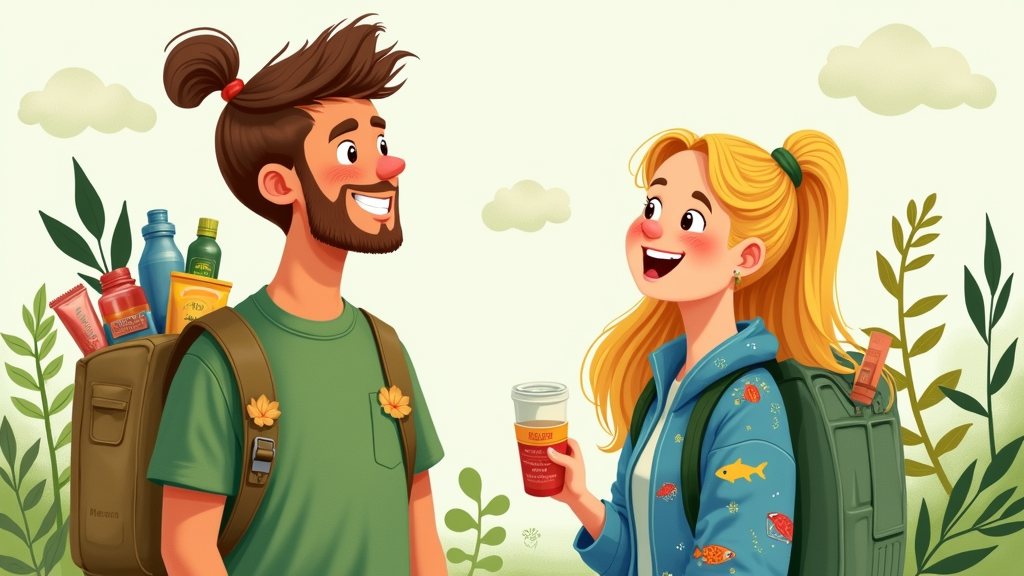
The No Waste Day at School
Why is it important to reduce waste at school ?
Getting Ready for No Waste Day
After learning how the Recycling Center turns (1) trash into new things, Karim and Laetitia, along with their loyal dog, a border collie named Leo, returned to school. They showed the kids how plastic wrappers become park benches and glass bottles become new bottles. The students' eyes sparkled with curiosity and excitement. Karim and Laetitia, with their contagious (2) energy, decided to take their educational mission further. They suggested organizing a no-waste day at school to teach the kids sustainable (3) practices.
After showing examples of recycling, Karim and Laetitia started their meeting with the teachers. They explained how important it is to reduce waste at school. Every little action helps to protect the environment.
Karim, pointing at a big bag full of trash, says:
« Look at all this trash made in one week. »
Laetitia, with an enthusiastic smile, says: « We have eco-friendly (4) alternatives (5). »
Karim, with an enthusiastic smile, starts to explain:
« Reusable glass bottles are very handy. »
Laetitia, with an enthusiastic smile, adds:
« Cloth bags are a good idea too. »
After showing the children some eco-friendly alternatives, Karim and Laetitia prepared interactive workshops for them. They would learn to make things from recycled (6) materials. Karim even brought tools to turn plastic bottles into colorful flower pots. The children were excited to join in and find out how they could help make their school greener.
They find ways to replace waste and learn how to reduce their carbon footprint at school.
Discovering Waste Alternatives
The children learned to make useful things from trash. They understood that every small action helps to protect the planet.
Karim, with a big smile, talks to the children:
« You see how easy it is to make bags from fabric? It's a great alternative to plastic bags. By using fabric bags, we reduce waste and protect our planet. Every little action counts, just like you learned today by making useful things from waste. »
Laetitia, with an encouraging smile, adds:
« By using cloth bags, we replace plastic bags. It's a simple but effective way to reduce waste and protect our environment. You all did an excellent job today by making useful things with waste. »
Karim, full of enthusiasm, explains:
« Have you seen how we can turn glass bottles into decorative items or planters? By reusing glass bottles, we keep them out of the trash and give a second life to materials that can be very useful. It's another way to reduce waste and protect our environment, just like you did today by making things from waste. »
Laetitia, with an encouraging smile, suggests:
« What if you turned these glass bottles into pitchers or vases? You can use them for water or for flowers. By reusing these bottles, you give a second life to things that would have ended up in the trash. It's another way to reduce waste and protect our environment, just like you did today by making things out of trash. »
After showing the alternatives to waste, Karim and Laetitia organized a recycling workshop. The children made flower pots from plastic bottles. They also made markers from aluminum packaging.
After a wonderful waste-free day, Karim and Laetitia visit a community garden where they discover the joys of urban farming. In this garden, a curious white rabbit joins them. They show the children how to grow fruits and vegetables in the city, explaining the benefits of this eco-friendly practice. The children, amazed, learned to plant seeds and take care of young plants. Karim and Laetitia explained that urban farming helps reduce greenhouse gas emissions by cutting down on food transportation. They also showed the children how to use composting (7) techniques to enrich the soil. The day ended with a tasting of fresh vegetables picked from the garden. The children loved it and promised to keep taking care of the planet. Karim and Laetitia, happy with their mission, are already planning their next adventure to teach children about protecting the environment.
📺 Watch this article in video format
For an even more immersive experience, watch our video: