
Épisode · Wiki Storia
S1 - E6 | The Journey of the Seeds
How do plants make babies and grow?
On the road to knowledge with music for 3 to 6 year olds!
Today, we are going on a plant discovery adventure.
Pictures of our little adventurers in action - can you come and play with them?
🎼 Ready to move, sing and dream?
This first melody will take you on a musical discovery of the world!
🎤 Move, sing, discover!
Let's get adventurous with this second soundtrack. 😀
🎙 Read the lyrics to our music:
The lyrics of the two songs are identical, only the melodies are different.
The adventure begins with a story and discoveries for 6 - 8 year olds!
📻 Listen to this article as a podcast
For an immersive experience, enjoy our article in podcast mode. Click the player below to start listening and let the article carry you away!
📝 Quick summary of key information
How do plants make babies and grow?
Plants start their adventure from little seeds. These seeds are like sleeping babies waiting for the right time to wake up and grow.
For seeds to turn into plants, they need sunlight, water, and nutrients from the soil. It's like they are taking a nice sunbath and having a balanced meal!
The life cycle of plants is fascinating. First, the seed sprouts and becomes a little plant. Then, it grows, blooms, gets pollinated, and makes new seeds.
Germination is the magical moment when the seed starts to grow. It's like the seed says: Let's go on an adventure! and turns into a beautiful plant.
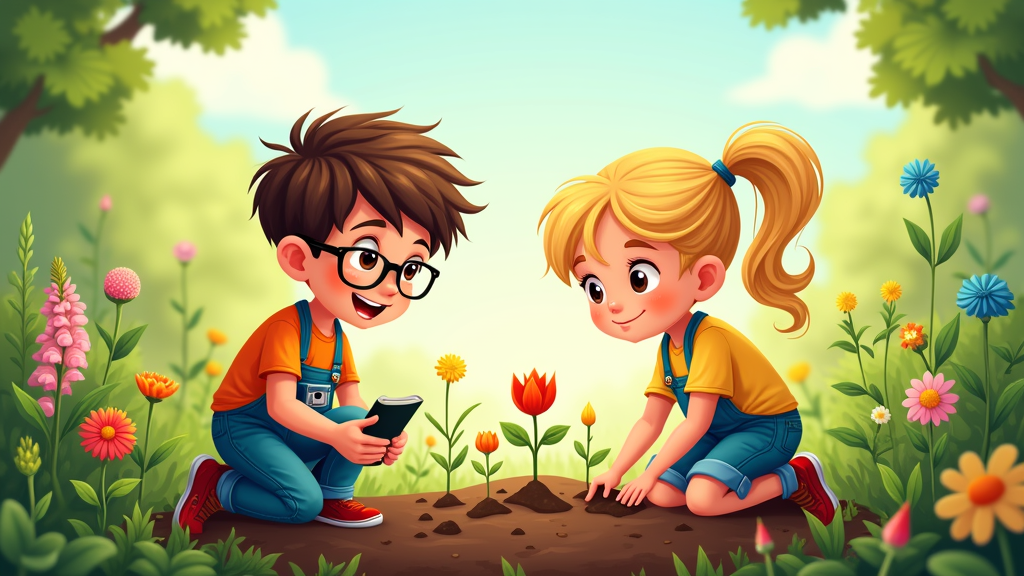
The Seed's Journey
How do plants reproduce and grow?
Planting Seeds
After planting seeds in the garden and watching them grow, Lucas and Elodie go inside. They remember the different stages of a plant's life and the importance of taking care of nature. They decide to share their discoveries by writing a new article. As they flip through their notes, Lucas suggests: What if we talk about plants this time? Elodie, always full of enthusiasm (1), agrees: Great idea! But where do we start?
Lucas, after thinking, suggests:
« Let's talk about seeds. »
Elodie, full of excitement, says:
« Yes, seeds are the beginning. »
After choosing their topic, they go to the studio garden. They take small packets of flower and vegetable seeds. Elodie reads the instructions on the packets: First, you need to prepare the soil by turning it over to aerate it and add compost for nutrients (2).
Lucas, focused, says:
« Now that the soil is ready, I will dig the holes to put the seeds in. »
Elodie, with a happy smile, says:
« I will put the seeds. »
Not long after, they gently place the seeds, cover them with soil, and water them softly. Now, we need to be patient, explains Elodie. The seeds need light, water, and warmth to sprout (3). They put up a small sign to mark the spot of their planting and go back to the studio.
They write an article about the life cycle (4) of plants and the importance of taking care of nature. Their article helps children understand how plants grow.
The Life Cycle of Plants
Lucas and Elodie are happy with their article. Elodie adds photos taken with her camera to show the different stages of the plant life cycle.
Lucas, excited, says:
« I am going to draw the sprouting seeds. »
Elodie, full of ideas, adds:
« I draw the flowers that grow. »
They work together to draw each step. Lucas draws the seeds sprouting. Elodie draws the flowers growing and writes detailed descriptions for each step.
Lucas, proud of his work, says:
« Kids will love our drawings. »
Elodie, excited, adds:
« Yes, they will understand how plants grow. »
After watching the plants grow and drawing each step, Lucas and Elodie are ready to share their knowledge with other kids. Their article is almost done, but they want to learn more about the life cycle of plants. So, they decide to visit a local farm where they can see how animals help the farm and how they are cared for. On the way, they talk about the differences between plants and animals, and how each plays an important role in the ecosystem (5). They wonder what new adventures await them and what stories they can tell to their young readers.
📺 Watch this article in video format
For an even more immersive experience, watch our video: