
Épisode · Wiki Storia
S1 - E4 | The Wobbly Ground
Why do some grounds sink?
On the road to knowledge with music for 3 to 6 year olds!
Today, we are going to explore sinkholes.
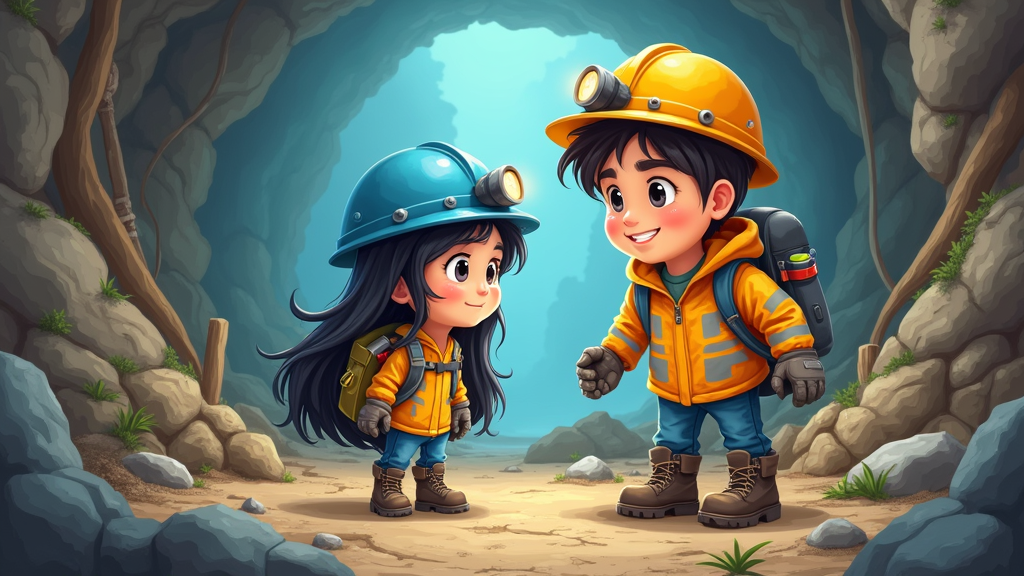
Pictures of our little adventurers in action - can you come and play with them?
🎼 Ready to move, sing and dream?
This first melody will take you on a musical discovery of the world!
🎤 Move, sing, discover!
Let's get adventurous with this second soundtrack. 😀
🎙 Read the lyrics to our music:
The lyrics of the two songs are identical, only the melodies are different.
The adventure begins with a story and discoveries for 6 - 8 year olds!
📻 Listen to this article as a podcast
For an immersive experience, enjoy our article in podcast mode. Click the player below to start listening and let the article carry you away!
📝 Quick summary of key information
Why do some grounds sink?
Sinkholes happen when the ground becomes unstable and sinks. Imagine a sandcastle falling into the sea. It's a bit like that!
Why do some lands sink? There are several reasons. Erosion, for example, is a natural process where water or wind slowly carries away the soil. People can also cause lands to sink by building structures or taking resources from the ground.
Erosion is like an artist that shapes the earth. Water, as it flows, carries away bits of soil, especially when it rains a lot. Rivers and streams are big shapers of nature.
Luckily, there are ways to make the ground stable and prevent it from sinking. You can use support materials, like concrete pillars, or strengthening methods, like adding gravel or sand to make the ground stronger.
Wobbly Ground
Why do some grounds sink?
The Ground Search
After learning how waste is stored deep underground and the importance of protecting the environment, Stephane and Nela, along with their loyal mixed-breed dog, Max, head to a new mission. They leave the geological storage site, where they saw protective barriers and monitoring sensors, to go to an area with sinking (1) ground. The region is known for its unstable soil, and the residents are worried about their homes. Stephane and Nela are determined to find solutions to stabilize the ground and ensure everyone's safety.
Once they arrive, Stephane and Nela start their investigation. They look at the cracks in the ground and the leaning buildings. The people living there look worried. Stephane and Nela decide to begin their work.
Nela, after looking at the cracks, explains: « Ground sinking happens often because of erosion (2), people's activities, or movements in the earth (3). »
Stephane, after looking at the cracks, says: « I will use measuring tools (4) to check how deep and how wide the sinkholes are. »
After looking at the cracks, Nela says:
« We need to find out why rainwater is getting into the ground. »
Stephane, after looking at the cracks, asks Max:
« Max, help us find places where water is collecting. »
After digging trenches, Stephane and Nela find weak rocks and water-filled holes (5). They decide to use strengthening techniques to stabilize the ground. They use their knowledge to stabilize the ground and protect the homes, using support materials and strengthening methods.
The Clever Fix
Stephane and Nela get to work. They put in drains to take away water. Then, they fill holes with cement. Nela puts sensors to watch the ground. Stephane puts up signs. They are determined to make the ground steady.
Nela, after checking the data, says:
« The sensors show movements in the ground. »
Stephane, after checking the sensors, says:
« We need to make the weak spots stronger. »
Nela, after checking the sensors, explains: « Okay, but we need to analyze the sensor data first to find out exactly where the ground is the most unstable. Then, we can inject more cement into those specific areas to strengthen (6) the ground. »
Stephane, after checking the sensor data, says:
« Now that we have found the most unstable areas, we can put metal supports to strengthen these parts. This will help spread the pressure and make the ground steady. »
After injecting cement into the most unstable areas and installing metal supports to strengthen the ground, Stephane and Nela see that the houses are now protected. As they finish their work, they receive a special invitation. They head to an underground high-tech lab where they can discover the latest drilling and underground construction technologies, which are essential for their future missions.
📺 Watch this article in video format
For an even more immersive experience, watch our video: