
Épisode · Wiki Storia
S1 - E7 | The Sensor Garden
What if technology could feel the world?
On the road to knowledge with music for 3 to 6 year olds!
Today, we are going on a journey to discover sensors.
Pictures of our little adventurers in action - can you come and play with them?
🎼 Ready to move, sing and dream?
This first melody will take you on a musical discovery of the world!
🎤 Move, sing, discover!
Let's get adventurous with this second soundtrack. 😀
🎙 Read the lyrics to our music:
The lyrics of the two songs are identical, only the melodies are different.
The adventure begins with a story and discoveries for 6 - 8 year olds!
📻 Listen to this article as a podcast
For an immersive experience, enjoy our article in podcast mode. Click the player below to start listening and let the article carry you away!
📝 Quick summary of key information
What if technology could feel the world?
A sensor is a small device that detects things around it. It is like an eye or an ear for machines.
A sensor can detect light, temperature, or even movement. For example, a light sensor knows when it is dark.
A sensor turns what it finds into electrical signals. These signals help machines understand what is happening around them.
Sensors help machines react to what is happening around them, as if they have senses. For example, a light sensor in a flashlight helps the flashlight turn on when it is dark.
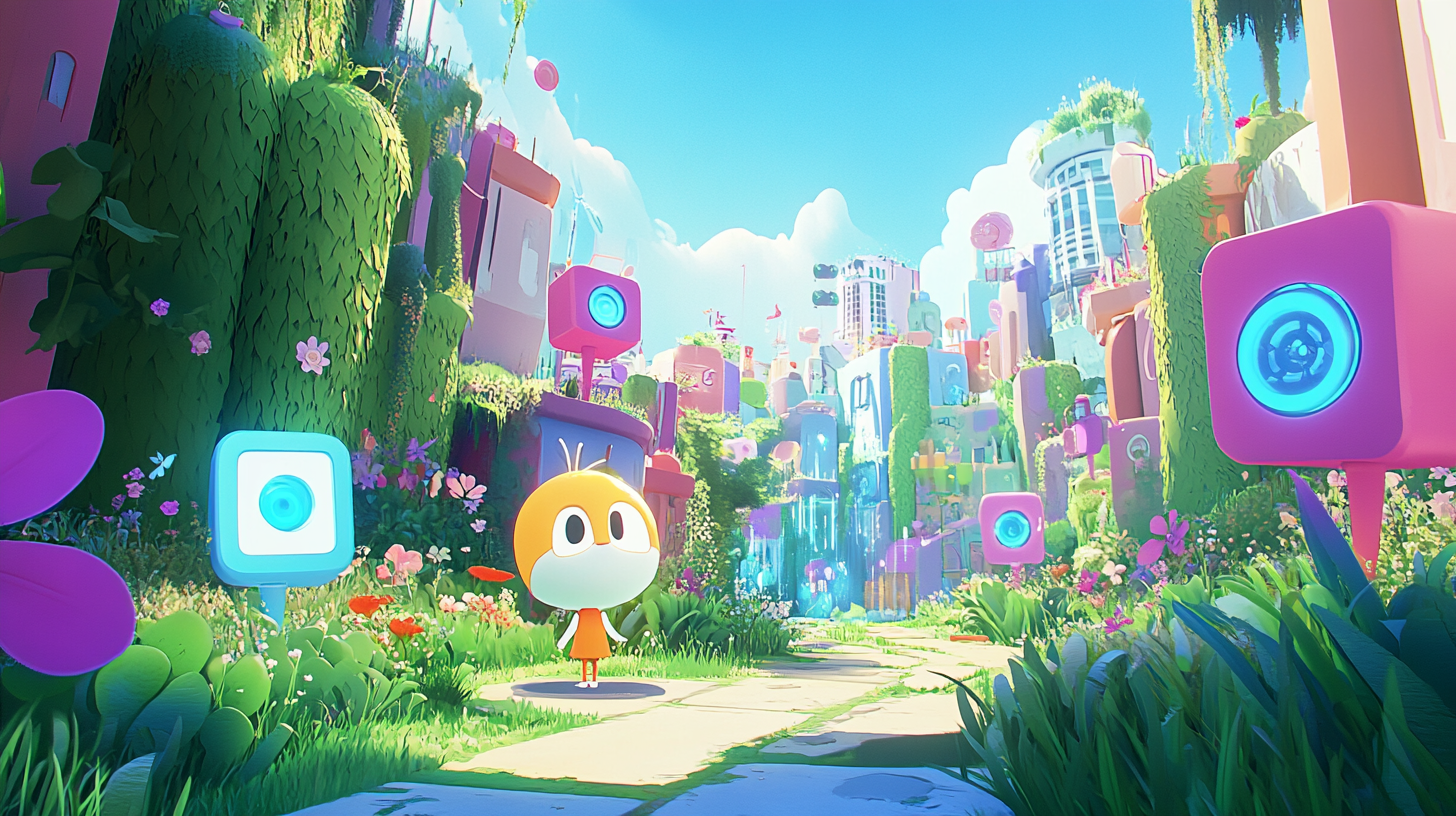
The Sensor Garden
What if technology could feel the world?
The Discovery of Sensors
At the top of Transistor Mountain, the children solved the riddles (1) given by the tiny electronic squirrels. With their logic and bravery, secret paths opened up, revealing a glowing portal that led them to a new adventure. They learned that transistors (2), these tiny guardians of electricity, are essential for controlling the flow of energy in the electronic world. Soon after, Nino and Luma find themselves in an enchanted garden where every element seems alive and reacts to their presence. Sensors, these little detectors, are everywhere and pick up the slightest changes in their environment. Nino, with his magnifying glasses, carefully observes the light (3) sensors that activate with the slightest ray of sunshine. Luma, on the other hand, admires the motion sensors that react to every movement of the children. Together, they discover that this garden is more than just a beautiful place: it's an electronic ecosystem (4) where every sensor plays a crucial role.
Nino, amazed, says:
« Look Luma, these flowers change color with the light. »
Luma, amazed, adds:
« Yes, and the leaves move with the wind. »
Nino, curious about how the sensors work, says:
« I'm going to see how it works. »
After putting on his magnifying glasses, Nino is seen carefully taking apart a motion sensor. Luma, fascinated, watches how the pressure sensors react to every step the children take, lighting up the ground with little colored lights. The light sensors, placed on the petals of the flowers, are seen changing color depending on the light intensity. The temperature sensors, on the other hand, are seen changing the size of the leaves depending on the surrounding heat. The children start to understand how these sensors work and how they can be connected to create even more wonderful experiences.
Luma, amazed, says:
« It's magical, Nino. Each sensor has a special job. »
Nino, eyes sparkling with excitement, exclaims:
« Yes, and we can connect them to create even more magical effects. »
Once Nino and Luma have explored every corner of the garden, they realize that each sensor has a special job and that they can play with them to create magical effects. They decide to take on a challenge: connecting the sensors to create a symphony of lights and sounds. Nino and Luma learn to connect these sensors to make colors and sounds vibrate with every emotion in the world. Now they need to figure out how to connect them.
The Symphony of Sensors
Nino and Luma look for colorful wires to connect the sensors. They find red, blue, and green wires. They start to connect the light sensors to the sound sensors. They wait for the sunlight to hit the sensors.
Nino, all excited, says:
« Look, Luma. The light touches the sensors. »
Luma, amazed, says:
« Yes, and I hear a sweet melody. »
Nino, amazed, says:
« It's magical. The light and sound sensors work together. »
Luma, eyes sparkling, then suggests:
« Now, let's connect the motion sensors to the color sensors. »
Nino and Luma connect the motion sensors to the color sensors. With every move the children make, the flowers change color. The garden becomes a fascinating show. The children laugh as they watch the flowers change color.
After watching the flowers change color with every movement, a bright idea pops into the children's minds. They are then taken to a workshop filled with electronic parts (5). The colorful wires and glowing chips are picked up by the children, who wonder how each tiny piece can create amazing inventions. Nino and Luma then start building their own circuit (6), combining everything they have learned on their journey. By looking at the resistors and transistors, they discover the art of connecting circuits. They then understand that each sensor, each part, has an important role in the electronic world. With a secret smile, they get ready for a new adventure, eager to explore other mysteries hidden in the world of electronics.
📺 Watch this article in video format
For an even more immersive experience, watch our video: