
Épisode · Wiki Storia
S1 - E3 | The Enchanted Variable Reef
Why is it important to name your variables well?
On the road to knowledge with music for 3 to 6 year olds!
Today, we are going to discover variables.
Pictures of our little adventurers in action - can you come and play with them?
🎼 Ready to move, sing and dream?
This first melody will take you on a musical discovery of the world!
🎤 Move, sing, discover!
Let's get adventurous with this second soundtrack. 😀
🎙 Read the lyrics to our music:
The lyrics of the two songs are identical, only the melodies are different.
The adventure begins with a story and discoveries for 6 - 8 year olds!
📻 Listen to this article as a podcast
For an immersive experience, enjoy our article in podcast mode. Click the player below to start listening and let the article carry you away!
📝 Quick summary of key information
Why is it important to name your variables well?
Variables are like boxes where we put information in a program. For example, we can have a variable to count apples.
It is very important to name your variables well. If you name a variable 'numberOfApples', you know right away that it has the number of apples.
But if we just call it 'x', we don't know what it is. This can make the code hard to understand and cause mistakes.
So, giving clear names to variables helps to know quickly what they contain.
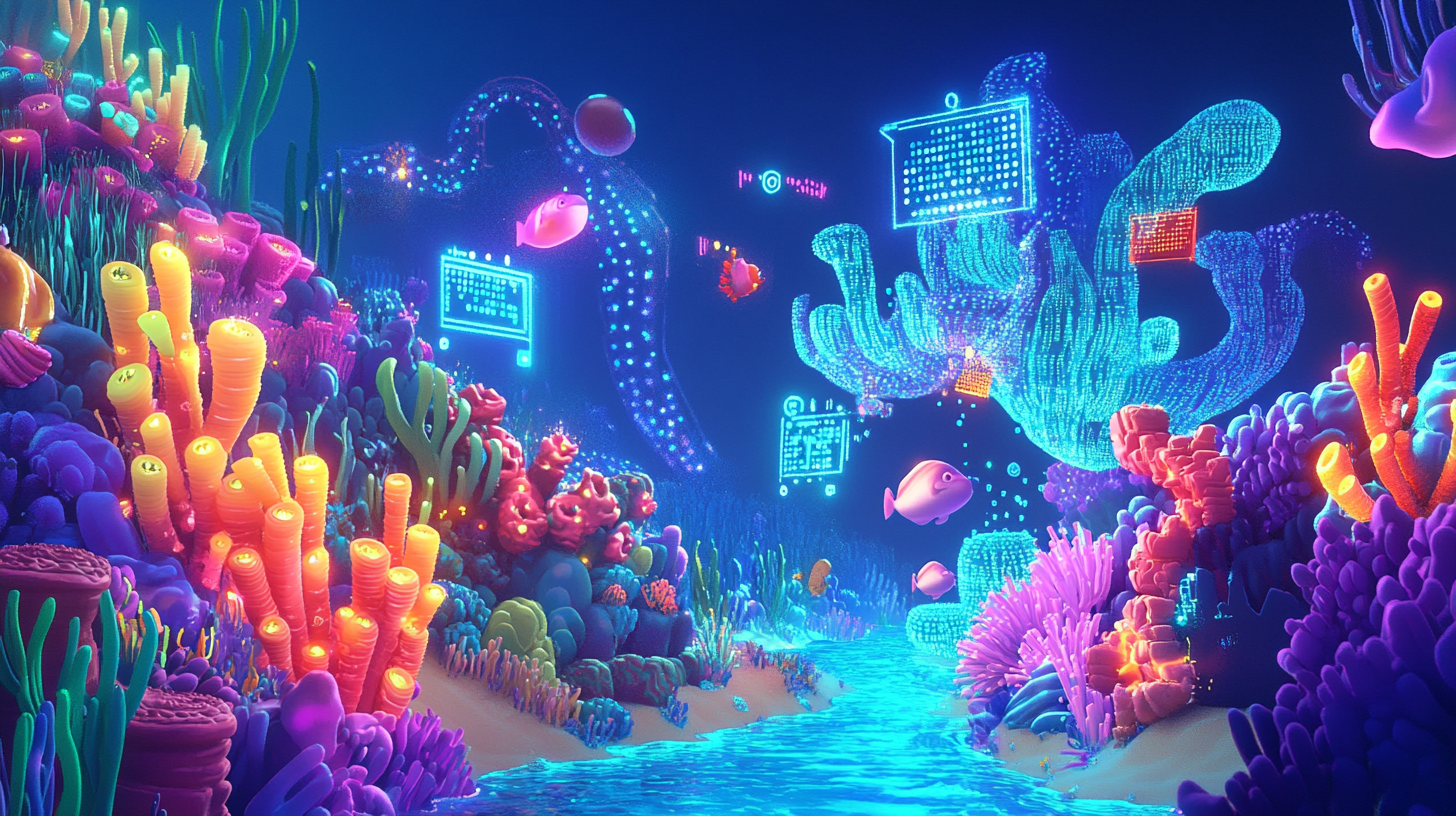
The Enchanted Variable Reef
Why is it important to name your variables clearly?
The Magic of Variables
After escaping the rocks of Semicolon Island, the young pirates realize that their trusty coded monkey, Codeus, forgot a crucial semicolon. The commands got mixed up, making the path impassable. Fortunately, once the semicolon was added, the rocks disappeared (1), and they could continue their journey towards new digital (2) adventures. Soon after, the Bit-by-Bit ship approaches the Variable Reef. This reef is known for its changing colors and moving shapes. Captain Loop, Pixeline, and Buggy, the little robot with a QR code eye patch, a USB arm, and a voice that makes a clacking sound when it thinks too hard, are ready to face a new challenge.
Pixeline uses her magic tablet. She wants to draw an exact map of the reef. The colors and shapes keep changing. The map becomes unstable (3). Navigation becomes hard.
Buggy, after watching the map change, says: « I will try to understand why the map becomes unstable. Maybe the variables (4) are changing without warning. I will help find the bugs (5). »
Pixeline, frustrated, says:
« The variables change too fast. I don't understand anything. »
Captain Loop, thinking for a moment, says:
« Variables should have clear names. This will avoid these mix-ups. »
By giving clear names to the variables, the reef stops changing. The code becomes easy to read... and stable.
The Key to Stability
The colors and shapes of the reef stay the same. Pixeline can finally draw a clear map. She shows the way to go.
Pixeline, with a triumphant smile, announces:
« Here is the map. We must go to the right. »
Buggy, after plugging in her USB key, says:
« I'm going to check for bugs. There must be no problems. »
Captain Loop, happy, says:
« It's perfect! Thanks to you, Pixeline, the variables are now well named. The code is more readable and stable. We can finally draw a clear map and follow the right path. »
Pixeline, nodding her head, says:
« Yes. The names of the variables must always be clear. This prevents mistakes. »
With the code stabilized (6), the young pirates can finally move forward to new adventures. But suddenly, when everything seems under control, Buggy, the funny and clumsy robot, accidentally (7) activates a never-ending function. The ship starts spinning around in the tunnel! The pirates must quickly figure out why the code is looping and how to get out of it. They know the next step will be full of challenges, but they are ready to face them with their team spirit and coding knowledge.
📺 Watch this article in video format
For an even more immersive experience, watch our video: