
Épisode · Wiki Storia
S1 - E2 | The Chaffinch Singers' Symphony
Why do chaffinches have such different beaks?
On the road to knowledge with music for 3 to 6 year olds!
Today, we are going on a Discovery of the Finches.
Pictures of our little adventurers in action - can you come and play with them?
🎼 Ready to move, sing and dream?
This first melody will take you on a musical discovery of the world!
🎤 Move, sing, discover!
Let's get adventurous with this second soundtrack. 😀
🎙 Read the lyrics to our music:
The lyrics of the two songs are identical, only the melodies are different.
The adventure begins with a story and discoveries for 6 - 8 year olds!
📻 Listen to this article as a podcast
For an immersive experience, enjoy our article in podcast mode. Click the player below to start listening and let the article carry you away!
📝 Quick summary of key information
Why do chaffinches have such different beaks?
Goldfinches have beaks of different shapes to eat better. Each beak is perfect for the food they eat. For example, a short and thick beak is great for cracking hard seeds.
There are many types of beaks on finches. Some have long and thin beaks to catch insects in the cracks of trees. Others have short and strong beaks to crush seeds.
The beaks of finches help them survive by making it easy to get food. For example, a pointy beak helps catch insects, while a strong beak helps crack nuts.
Goldfinches live in many places like forests, meadows, and even cities. Their beaks fit these environments. For example, in meadows, a short beak is great for eating seeds on the ground.
The Symphony of the Singing Chaffinches
Why do chaffinches have such different beaks?
The Island of the Singing Chaffinches
After spending an unforgettable (1) time with Tama, the old Galápagos turtle, Max and Mila felt wiser and more patient. They had learned that nature has its own rhythms and that the longevity (2) of giant tortoises is a perfect example of adaptation. Pico the Chaffinch, always full of energy, fluttered (3) around them, curious to find out what the next step of their journey held. The children put away their binoculars and notebooks, ready to board their magic boat again. They wondered which new mysterious island would appear on the horizon.
Not long after, the magic boat gently landed on a green (4) and singing island. The Island of Singing Chaffinches was a real concert of happy tunes.
Max, amazed, says:
« Look, Mila! Chaffinches everywhere! »
Mila, amazed, exclaims:
« It's wonderful! They all have different beaks. »
Max, amazed, says:
« Yes! Some are long and thin. Others are short and strong. »
Max and Mila were amazed. They took out their binoculars to watch the birds. The chaffinches, with their beaks of all shapes, hopped from branch to branch. Some beaks were long and thin, perfect for pulling insects out of tree bark. Others were short and strong, great for cracking hard seeds.
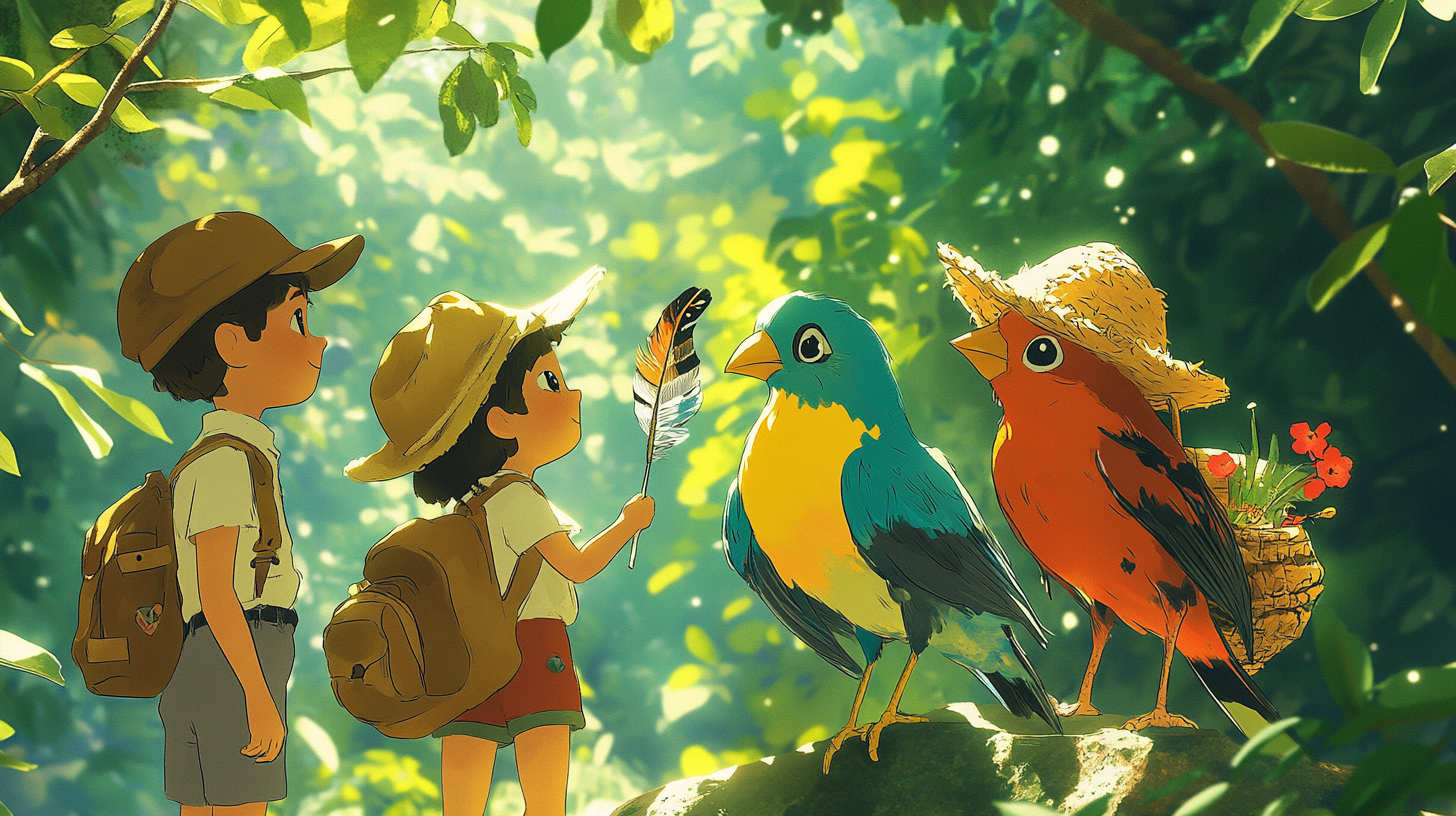
An old chaffinch tells them that their differences come from a common ancestor, and shows them a special feather with a clue for their quest.
The Secrets of the Beaks
Max and Mila listened carefully to the old chaffinch. They were fascinated (5) by his explanations. Chaffinches have different beaks to adapt to their environment (6).
Max, amazed, says:
« Wow! Beaks change over time. »
Mila, amazed, says:
« Yes, and it helps them survive. »
Max, amazed, says:
« Chaffinches are really smart. »
Mila, curious, asks:
« And you, you have watched a lot. »
Pico the Chaffinch smiled. He was happy to share his knowledge. Max and Mila took notes in their notebooks. They wanted to remember everything.
The children took the special feather and carefully put it in their bag. Then, they spotted a brightly colored (7) island in the distance. On the Island of Colorful Lizards, Mila and Max found a rainbow lizard playing hide-and-seek in the bushes. The children were curious: why did some lizards have bright colors? They wondered if these colors had a special role in the lizards' survival. With Pico the Chaffinch, they got ready to explore this new island, eager to discover even more nature secrets.
📺 Watch this article in video format
For an even more immersive experience, watch our video: