
Épisode · Wiki Storia
S1 - E2 | Mercure the Swift and the Crater Hop
Why is Mercury the Swift the planet closest to the Sun?
On the road to knowledge with music for 3 to 6 year olds!
Today, we are going to explore Mercury.
Pictures of our little adventurers in action - can you come and play with them?
🎼 Ready to move, sing and dream?
This first melody will take you on a musical discovery of the world!
🎤 Move, sing, discover!
Let's get adventurous with this second soundtrack. 😀
🎙 Read the lyrics to our music:
The lyrics of the two songs are identical, only the melodies are different.
The adventure begins with a story and discoveries for 6 - 8 year olds!
📻 Listen to this article as a podcast
For an immersive experience, enjoy our article in podcast mode. Click the player below to start listening and let the article carry you away!
📝 Quick summary of key information
Why is Mercury the Swift the planet closest to the Sun?
Mercury is the planet closest to the Sun. It is the first planet in the solar system, which means it is the closest to our star. Imagine a small gray ball that spins very fast around the Sun.
Mercury is a small, rocky, and gray planet. It doesn't have much air, so there's no atmosphere like on Earth. Its surface is full of craters, like a big moon cheese.
Temperatures on Mercury are extreme. During the day, it can be as hot as 430 degrees Celsius, hot enough to melt metal. At night, it gets very cold, down to -180 degrees Celsius. No wonder there's no life there!
Mercury is important for scientists. It helps to understand how planets are formed and change. By studying Mercury, scientists can learn more about our own planet and the universe.
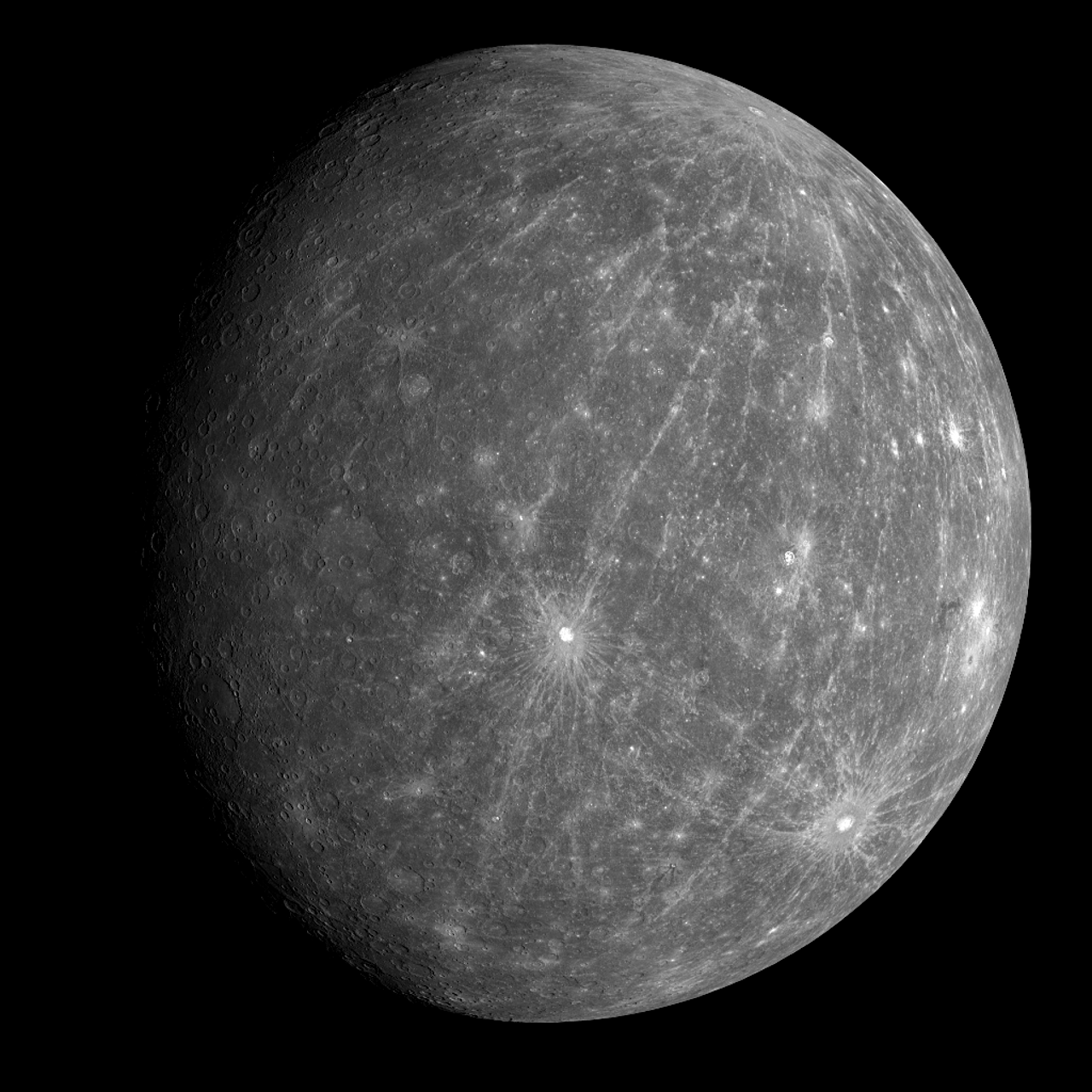
Mercure the Swift and the Crater Hop
Why is Mercure the planet closest to the Sun?
Arrival on Mercury
After listening to the explanations of the Shining Sun, a happy star with big, bright arms, two little asteroids, Piko and Luma, learned why the star shines so brightly. They also learned that heat is necessary for life to grow. Following their shiny map, Piko and Luma are guided to Mercury the Swift, a lively planet that plays hopscotch with craters. With incredible speed, she orbits (1) around the Sun faster than the eye can follow. Mercury the Swift is known for her quick wit and boundless (2) imagination (3), which helps her solve the toughest problems with amazing (4) ease. Following their shiny map, Piko and Luma are led to Mercury the Swift, a lively planet that plays hopscotch with craters.
Piko, excited, shouts:
« Luma, look at this planet! »
Luma, amazed, says:
« Yes, Piko! It is so shiny! »
Mercure the Swift, with a mischievous smile, exclaims:
« Welcome, Piko and Luma! »
Piko, curious, asks:
« Why are you so close to the Sun? »
Mercure the Swift, with a mischievous smile, explains:
« The Sun pulls me strong. I am fast and spin quickly around it. »
Mercury the Swift gives them a small silver ball with a quick whistle – a secret sound that will guide them to Venus.
The Crater Challenge
Piko and Luma look at the small silver ball. It shines brightly. They are amazed by this gift.
Piko, amazed, shouts:
« It's wonderful! »
Luma, amazed, whispers then:
« Yes, Piko! It shines like a star. »
Mercure the Swift, with a mischievous smile, tells them:
« This silver ball will guide you to Venus. »
Piko, excited, announces:
« We are going to jump from crater to crater. »
Luma, excited, says: « We are going to discover (5) hidden secrets. »
With one last jump, Piko and Luma leave Mercure the Swift. Following the silver whistle, they discover a magical sight. Venus, wrapped (6) in golden clouds, dances gracefully (7). The little asteroids will finally understand why Venus shines so brightly in the sky.
📺 Watch this article in video format
For an even more immersive experience, watch our video: